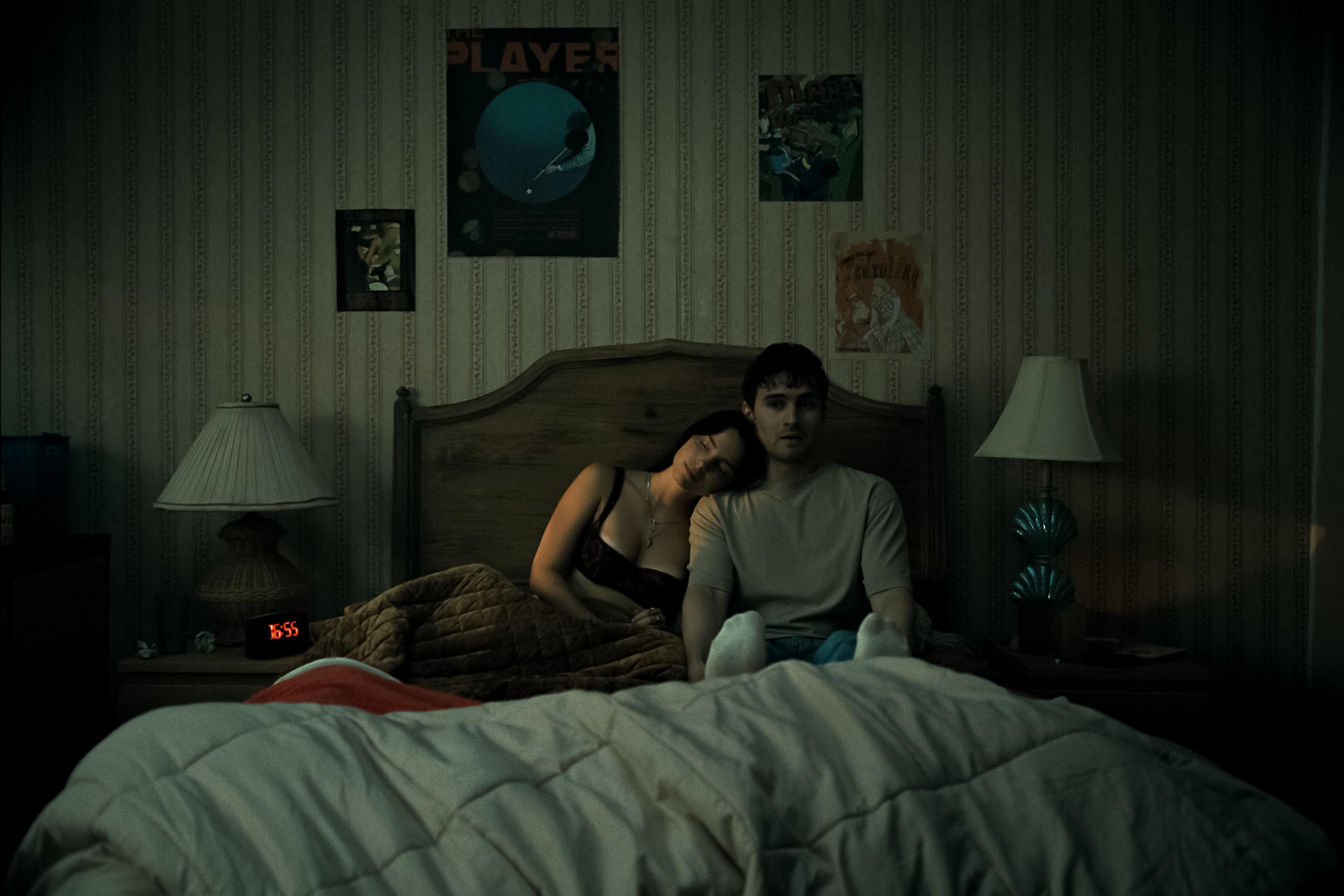
Things aren’t looking good for either Nicolas Cage near the end of 2002’s Adaptation., hiding out in a muggy Florida swamp as a deranged Meryl Streep hunts them with firearm in hand, but that doesn’t stop Donald from waxing poetic. Opting to use presumably his last moments of life on a high school anecdote, he relays the story of a teenage crush who found his affections comical, though the unseen Sarah Marsh doesn’t get the last laugh. Unrequited as they might have been, the feelings were still true, enlivening Donald through their very existence. Given the reality bending nature of director Spike Jonze and writer Charlie Kaufman’s still-mesmerizing film, it’s probably worth regarding the late-breaking pivot to aphorisms with some skepticism, though the 24 years that have passed since the movie’s release might have you pining for the mangled optimism with which male yearning used to be handled. In the harsh light of 2026, Obsession arrives at a perfect, stomach-turning rejoinder to Donald’s clarifying quote: “Just because you chose this for her doesn’t make it less real.”
Delivered with haunting detachment by a customer service representative over the phone, the line is chilling, if not exactly elucidating. After all, it arrives well past the hour mark of writer/director Curry Barker’s sophomore feature, a point at which his assertion is both disgusting and irrefutable. The one making said call is Baron “Bear” Bailey (Michael Johnston), a fumbling, morose 20-something who’s harboring a soul-sucking crush on co-worker Nikki Freeman (Inde Navarrette). After failing to make his feelings known, Bear haphazardly turns to a trinket he bought for Nikki at a local novelty shop called a One Wish Willow, said to make dreams come true for the cool price of $6.99 before sales tax. You can’t really blame him for assuming it won’t work, but judging his actions after the fact is more than fair play. Lord knows we’ve got our practice in already.
Barker is exploring some extremely well-trodden ground here, laying his scene at the intersection of so many recent horror flicks that you eventually lose count. The most obvious point of comparison is writer/director Michael Shanks’ Together, which hit screens only 11 months ago and mined similar beta-male territory through a roughly analogous lens of sorcery, but that’s really just the tip of the iceberg. The vapid, inert characterization of Bear and his friends operates from the same template as Companion, Bodies Bodies Bodies, It’s What’s Inside, and Talk to Me, all of which employed, to varying degrees, the bodily displacement, party games gone awry, and cranium violence that Barker is working with here. That’s all before addressing how a century’s worth of iteration on W.W. Jacobs’ 1902 short story The Monkey’s Paw has turned ‘be careful what you wish for’ into one of our most reliable and relied upon plot engines. It’s old hat to say that every story has already been told, but Obsession seems determined to bolster the canard, and prove that it doesn’t matter all the while. Consider the mission accomplished.
Obsession’s narrative is only novel if you’ve never stepped foot in a movie theater before, which counterintuitively amplifies its excellence, all without the aid of superior aesthetics. Taylor Clemons’ shadowy camera work is beautifully entwined with a moody, droning score from Rock Burwell, but the sights and sounds of these things have been pretty great for a while now. It’s the yarn-spinning that’s proven tricky, especially in more high concept affairs, where a sort of cause-and-effect mysticism results in grating, innumerable plot holes. Barker’s script is perhaps the most glaring offender in recent memory, but is so good at engaging its viewers that the complaints all slip away like water off a duck’s back. In the moment, an audience only second guesses narrative mechanics when they’re not properly captivated; Barker’s film douses multiplex seats in super glue.
He’s certainly getting help from his cast, an ensemble of fresh faces that have little trouble establishing themselves as recognizable vicenarians, complete with all the protective nonchalance that their age implies. Johnston may be a doughy, nothing burger of a young man, but you’ve met his ilk on myriad occasions, a verisimilitude that extends to his blustering best friend Ian (Cooper Tomlinson) and their overcompensating rock chick co-worker Sarah (Megan Lawless). What’s new is Navarrette, whose duel performance as the disaffected apple of Bear’s eye and her frenzied, dangerous counterpart would have doomed the whole enterprise if handled by a lesser actor. It’s a breathtaking turn, terrifying and heart-breaking in equal measure, made visceral by Navarrette’s ability to contort body and face alike, as well as the brilliantly agitating ways that Clemons has chosen to shoot her. Whether leering in a nearby corner or coming up entirely too close for comfort, Navarrette is a spell-binding presence, so much so that you almost forget that Andy Richter is also in attendance.
That’s right, Conan O’Brien’s right hand man for nearly 20 years of late night television somehow found his way into a movie with a reported six-figure budget, though his assignment of cuing the audience to laugh remains unmoved. His dry mutterings run the gamut from chuckle-worthy to uproarious, in keeping with a film whose jokiness mingles perfectly with dread-induced tension, doggedly sanding down the line between terror and guffaws until the difference is negligible. Barker’s editing employs the same durational qualities as cringe comedy, forcing us to sit through endless takes of nauseatingly rigid expressions, the players silently trying to game out their next course of action, all coming up empty. In a packed theater, the discomfort turns almost riotous, marking Obsession as not only the best horror flick of the year so far, but also 2026’s most lively farce. And since we’re already doling out accolades, let’s go ahead and add Most Intriguing to its ledger.
Reading Obsession as a treatise on Incel culture and the male loneliness epidemic is unavoidable, as baked into the enterprise as codependency is in Together, and the pitfalls of self-satisfied liberalism in Bodies Bodies Bodies. The difference is in Obsession’s reluctance to be boxed into its most readily available interpretation, as well as its willingness to touch the third rail. That latter pronouncement regards the sexual assault that sits right at the movie’s center like a pit in the stomach; what else would you call a person entering into a romantic union without full use of their mental facilities? Ian and Sarah sure don’t know, both gesturing toward the subject without calling it by name in a manner that seems destined to enrage certain viewers, but Barker has no interest in coddling.
Like his contemporaries, he harbors a healthy disdain for the feckless myopia of modern masculinity, but he evens the scales by running Nikki through Insecure Girlfriend playbook, forcing his haunted heroine to embody all the unsightly maneuvering often associated with the fairer sex. Whether this is further evidence of Bear’s status as an unreliable narrator, or Barker grinding an axe against an ex is open for discussion, but what’s less debatable is that Obsession is sturdy enough to withstand both points of view. Barker is clearly still working out the answers for himself, and that unresolved testiness is both nasty and delicious in a cinematic landscape that values legibility above all else. This one is fuzzier, more hazardous, and electrifying for the eagerness with which it toes the line. Go ahead, decide what it all means. Just because you’ve chosen for Barker doesn’t make his film any less real.
Leave a Reply