There’s a chance that, all these years later, a decent percentage of young basketball fans aren’t even aware that Michael Jordan’s finals-winning shot over Byron Russell wasn’t his last, but time tends to be cruel to middling comebacks. His Airness’ two season stint with the Washington Wizards, which lasted from 2001 to 2003, fell well short of his peak years with the Chicago Bulls, but the greatest to ever do it still logged north of 20 points per game in each campaign. More than serviceable but less than transcendent, NBA history is a bit more legible if you simply ignore Jordan’s return, a fate that almost certainly awaits Daniel Day-Lewis’ new feature Anemone. Released nearly eight years after the iconic actor’s sudden retirement, the movie, which is directed and co-written by the vaunted thespian’s son, Ronan, was met with a shrug from the critical community and flopped spectacularly during its opening weekend at the box office. If an all-timer reemerges and no one’s there to see it, does it even make a sound?
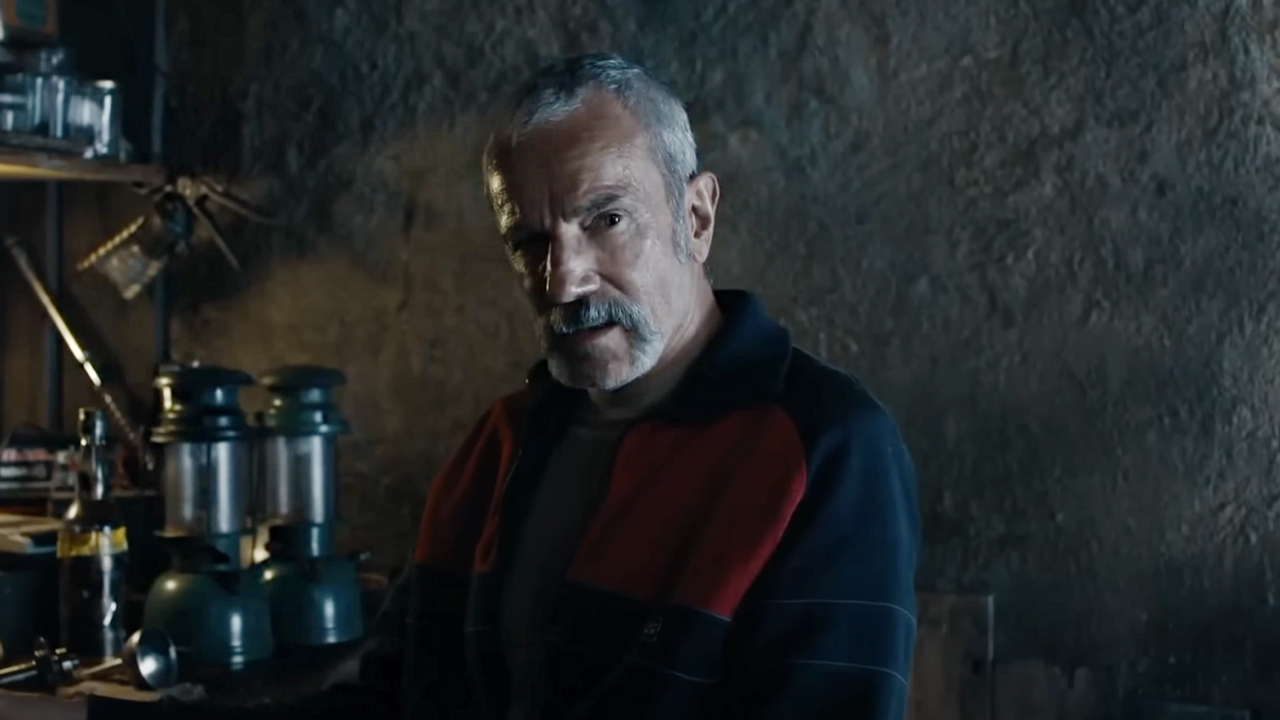
It’s not just the senior Day-Lewis who’s being called back to action here, but also his character Ray, a hermit living alone in a woodland cabin on the outskirts of northern England. Following two decades of familial estrangement, he’s visited by brother Jem (Sean Bean), here on the marching orders of Ray’s former wife Nessa (Samantha Morton). Their son, Brian (Samuel Bottomley), is mulling over enlistment in the IRA, a path that led Ray to his current state of squalor, and one that Jem and Nessa hope can be avoided with a little fatherly advice. It’s a long shot, and not only because Ray left before making his progeny’s acquaintance; the PTSD-riddled veteran is in quite the psychological state, as Jem will find out over the course of their tremulous reunion.
The reasons behind Ray’s disappearance and tortured paradigm will eventually come into focus, but they’ll have to do so without the benefit of visual dramatization. Composed almost entirely of conversations regarding a regrettable past and an uncertain future, Anemone is confoundingly situated in the lull between moments of actual intrigue, more pro and/or epilogue than standalone film. To complain about a movie’s lack of tangible events is to ignore its intent, and Ronan’s counterintuitive approach here is certainly born of iconoclastic ambition, calling attention to his roundabout manner of storytelling as though he’s the first to have envisioned an inverted structure. Believing that you’ve arrived at something truly original is a familiar folly of youth, and the junior Day-Lewis, who was all of 26 at the time of filming, clearly sees himself as an old soul, piling on devastation and trauma in the hopes that something profoundly human will manifest itself in the process. As is so often the case, all the stabs at maturity only make him seem more like a newcomer, demanding admittance to the Big Kids table on his very first outing.
From a technical stand point, he’s actually got a case, though the invitation would be better addressed to cinematographer Ben Fordesman. Overhead shots of trees looking like so much romanesco won’t score him points for originality, but his camera work doesn’t need revelation to leave you dizzy. Benefiting from deliriously high definition, the lensing here turns the natural world into something surreal and psychedelic, with Bobby Krlic’s domineering score warping Fordesman’s lavish findings into a leeringly beautiful show of force. Drawing so much attention to the technical side of the ledger usually siphons power away from a movie’s plot, but given the struggles Anemone is constantly having with its chosen yarn, the audible and optical fireworks on display are a welcome distraction.
They’re joined there by Daniel Day-Lewis, who’s every bit as magnetically intense as we remember. Chomping through hunks of dialogue like a man determined to make the most of his time at the local buffet, the three-time Oscar winner is more tornado than person here, leveling everything in his path. Bean looks as shocked as the audience, sucker punched into submission by all of Day-Lewis’ deranged largess, mumbling through his performance in an awed stupor. There’s grace inherent to stepping back while a generational talent goes berserk, though in the case of Morton, who never shares the frame with the film’s star, that generosity is one sided. She’s entirely too accomplished for her role as a bereft afterthought, though at least she gets to leave the house. Bottomley hardly exits his room, and while your nearest boomer will likely take solace in his lack of cellphone addiction, at least a cellular would give him something to do besides look forlornly out his window.
At least peering through the glass gives him a good view of the film’s climatic hailstorm, a thunderous act of god that’s just the tip of the grapefruit-sized ice chunk when it comes to giving Paul Thomas Anderson his flowers. It makes sense that Ronan would have grown up revering the rain of frogs that affords Magnolia its bewildering conclusion; he was all of 10 years old when There Will Be Blood minted his dad as acting’s gold standard, and still a teenager when the elder Day-Lewis gave his supposedly last performance in Anderson’s Phantom Thread. A bedside apparition recalls the latter film in Anemone’s early goings, while Blood serves as a constant reference point, with seaside sequences and grimy ruminations ever running the risk of outright plagiarism. This is, again, an instance of cribbing from true visionaries in hopes of joining their ranks, but the gamesmanship implodes as soon as the old man stumbles his way on screen.
Accusations of nepotism are understandable given the context, but the Day-Lewis industrial complex is cutting off its nose to promote its face. Anemone would surely have never been made without the family’s elder statesman, but his paternal support only blots out the son, unwittingly revealing just how unprepared Ronan is to handle such explosive materials. He’s the big loser of his own damned movie, with the sterling work Daniel, Fordesman, and Krlic leaving their would-be leader battered in the wake of their collective carnage. A sophomore feature seems unlikely, just as further onscreen exploits with Daniel Day-Lewis appear improbable, but no legacies were harmed in the making of this film. Jordan’s years in D.C. are only relevant to the die-hards, just as Anemone will only appeal to Day-Lewis completists. Everyone else will forget that it ever happened.
Leave a Reply