The annual cycle goes something like this: Oscar nominations arrive in the middle of January, stateside distributors finally release the Best International Feature combatants into a select number of theaters, your most dedicated movie buff friend goes and sees them while wearing their sternest expression, and most everyone else avoids them like the plague. Yes, the subtitles can seem a bit daunting for Joe Popcorn, though it’s not the reading that keeps most potential viewers at bay, but rather the subject matter. With only five slots divvied out to the rest of the planet, Academy voters tend to throw their lot behind all things dire, austere, and, most importantly, important. Those descriptions also befit a majority of the Best Picture slate, but with double the seating at the ceremony’s main table, some lighter fare inevitably slips through. Your Marty Supremes, Frankensteins, and F1s serve as enticing extracurriculars for anyone who doesn’t want to show up to an Oscar watch party conversationally empty-handed, but that overseas collection can’t help but feel like homework. Even the most pot committed cinephiles buy tickets while worrying about drooping eyelids, but they needn’t be concerned when the lights go down for It Was Just An Accident. This one will prop them open for you.
Mirroring that exhilarating bait-and-switch, writer/director Jafar Panahi’s latest opens on a nuclear family unit driving home on a darkened evening, only to pull them away just as we’ve gotten our sea legs. A mechanical failure forces the unnamed father (Ebrahim Azizi) to pull into the nearest auto shop, whose owner, Vahid (Vahid Mobasseri), promptly retreats to the back room to spy on his newest customer from afar. His covert operation eventually leads Vahid to the family home, though the man’s true identity remains a mystery to stalker and audience alike. Some corroboration is in order, a task that initially falls to local photographer Shiva (Mariam Afshari) before ensnaring in a small handful of other townsfolk. With more witnesses come more opinions, plopping Vahid in the middle of a tug-of-war between inaction and its most extreme opposite.
Apologies if that synopsis strikes you as a bit obfuscating, but Accident, like most great movies, is ideally witnessed when its teller is allowed to hold most of the cards. While the modern Iranian setting and tyrannical government interference grant the film membership into the Important Cinema Club, the movie’s architecture is more in line with that of a crowd pleasing thriller. Written with the exactitude of a brain surgeon, Panahi’s screenplay is the best kind of withholding, dolling out information one breadcrumb at a time to keep the viewer starving for further clarity. That’s not to say Accident is confusing; a larger national and political context makes for a richer experience, but neither are necessary for fidgeting engagement, falling down the rabbit hole of a true blue corker that we foolish Americans stopped making about a decade ago. In a way, it’s less requiring of a passport than a time machine, harkening back to the suspenseful pulp of the 90’s with all the vivacious agitation that your local multiplex has been reluctant to provide.
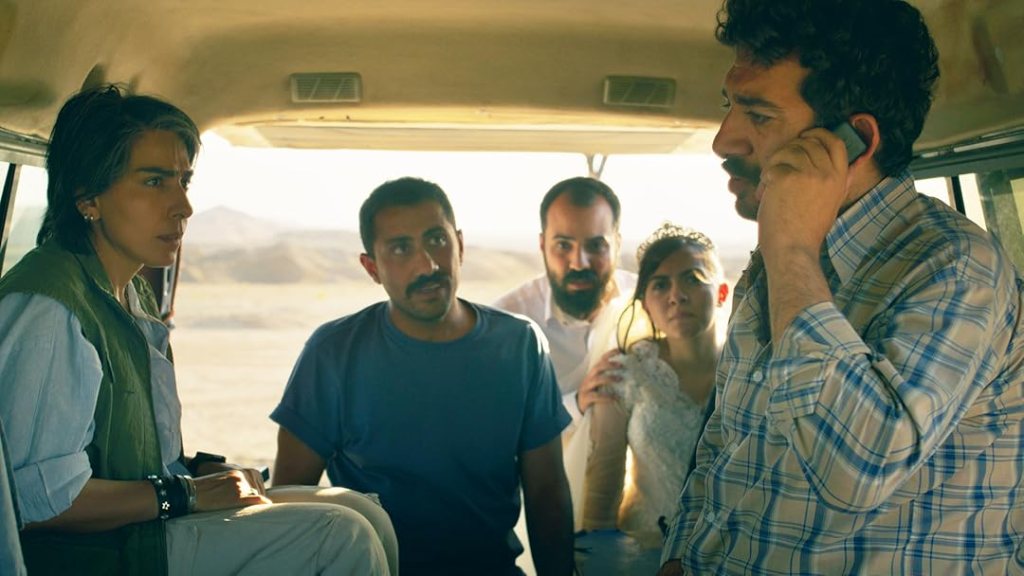
Skip back another ten-pack of years and you’ll find Joel and Ethan Coen’s Blood Simple as a surprisingly apt comparison point, though that shared strand of DNA is nowhere near as shocking as Accident’s unwitting similarities to Little Miss Sunshine. Twee and adorable it is not, but that iconic van, complete with unconscious body, has found a second home in the middle east, and its comedy-of-errors engine is still running. Panahi may be loath to undercut his fraught narrative with a string of punchlines, but he’s equally averse to ignoring the humor of everyday life, especially when his characters are in this far over their heads. Neither idiot nor expert, the players here are woefully unprepared for their sudden undertaking, a schism between motivation and proper training that was similarly mined for laughs in last summer’s Weapons. Likening them in any other way would be a struggle, but recalling that tightrope walk between intensity and guffaws should key the uninitiated into Panahi’s unique headspace.
All right, maybe that’s not the only kinship between Accident and director Zach Creggor’s surprise horror smash, because the ensemble here is similarly marvelous despite tuning into an entirely different frequency. Rather than rabidly chewing scenery, each actor fully commits to unadorned realism, spearheaded by Mobasseri. Doughy and disheveled, his everyman act never once strains credulity, sacrificing a would-be star-making opportunity at the altar of wholesale believability. He’s joined there by Afshari’s bristling anger and immovable professionalism, as well as the frenzied confusion of an engaged pair of played by Hadis Pakbaten and Majid Panahi, whose quasi-screwball bickering lets some air into a movie that’s at risk of overheating. One could argue that Mohammad Ali Elyasmehr’s turn is a little too eager to blast in more A.C., but Panahi’s desire to cool things down a bit is understandable. He’s certainly spent more than his fair share of time roiling in the heat.
The stories of Panahi’s unjust treatment by the Iranian government are both legion and legend, having been imprisoned on multiple occasions for the political dissidence featured in his films. Travel bans have also flitted in and out of his life for over a decade, as well as restrictions against filming of any nature, though as any true rebel will tell you, it’s only illegal if you get caught. Accident’s clandestine production process was always bound to overshadow the actual content in a sympathetic international context, and the bravery and gumption involved are worthy of full-throated celebration. They should not, however, drown out the nuts-and-bolts accomplishment of forging a rocket ship under cover of darkness, one that regards its technical limitations more as a DIY blessing than a curse. There’s beauty and tension inside of restraints, a notion that cinematographer Amin Jafari takes to the deepest cockles of his heart, capturing moistened brows, bustling streets, and dust-drenched deserts with unnerving clarity. He’s only in the less-in-more camp until he’s not, an extended, tundra-set argument and an early morning interrogation searing the retinas as though they’re the sun.
Focusing so intently on the cosmetic and kinetic achievements here shouldn’t come at the expense of Accident’s briar patch of thematic intrigue, but most audiences will already be on watch for the brainy stuff. Motifs involving cyclical violence, the guilt of those enacting grievous orders from above, and the way that domineering governments make grifters of us all might even pop out more than the yarn to which they’re attached, a product of being trained by Asghar Farhadi. Iran’s other most internationally famous filmmaker has already won two Best International Feature prizes at the Oscars (A Separation and The Salesman), making his voice the one that most film enthusiasts hear when they ponder that region of the world on the big screen. There’s plenty of connective tissue between the two, but Panahi’s latest is much less stately, opting for a hard-charging outrageousness that courses through a blink-and-you’ll-miss-it 104 minute runtime. Any trepidatious patriot needs look no further than the cockeyed getting-the-gang-back-together sequence to know that the thing plays the world over, no intellectual or emotional barrier to entry in sight. Aerodynamics have no interest in sovereign borders, and Accident is designed with maximum speed and impact in mind. It’s not an assignment; it’s a missile.
 Sherwood Likes to Watch
Leave a comment