You know a movie is working when it keeps you guessing, even if the questions at hand are just as mysterious as the answers. Italian writer/director Alice Rohrwacher is more of a magician than a filmmaker, egging the audience along with slight of hand, her slow motion odyssey hazily alluding to revelations that may never come. Happy as Lazzaro, her Cannes-vetted second feature, was equally prone to befuddle and beguile, a Pandora’s box unwittingly opened by ill-prepared Nexflix users back in 2018, but success and exposure hasn’t made her work any less inscrutable. Contending with her filmography, an extended, lyrical rumination on the past’s interactions with the present, requires patience and an open mind. There are treasures within, but they won’t be unearthed without a fight.
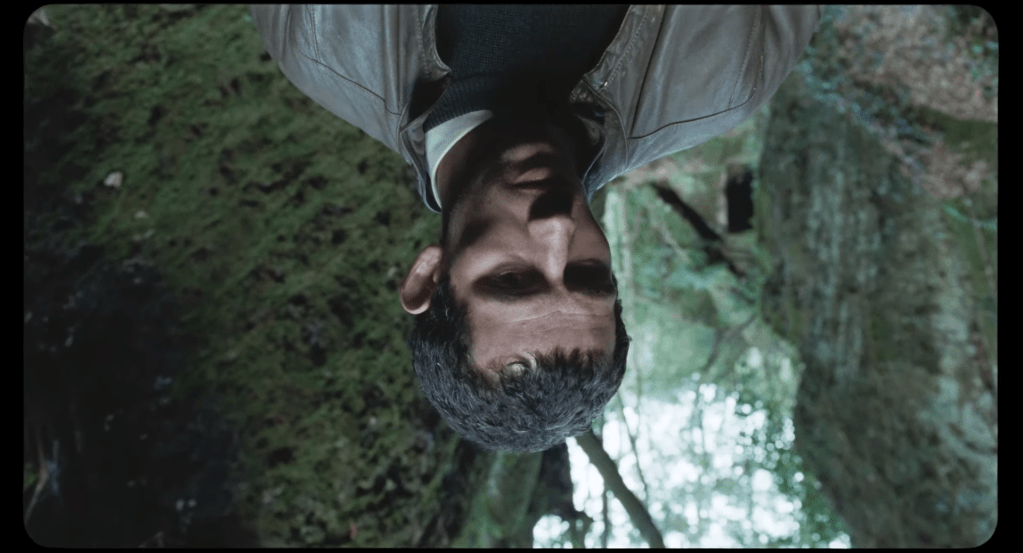
This excavation is made literal in La Chimera, though Rohrwacher is in no rush to get digging. Neither is Arthur (Josh O’Connor), the unkempt antihero of the auteur’s latest, whom we meet traveling home in a train compartment, freshly released from a prison bid. Disheveled and largely silent, Arthur’s crimes, and the vocation that begat them, remain tantalizingly vague as we witness him reacclimate to his life in the Italian countryside, a series of testy reunions that eventually reveal his prodigious skills as a dowser. After initial trepidation, The Englishman, as he’s known locally, lapses back into his illegal trade, heading a band of merry ne’erdowells as they unearth buried artifacts from the ancient gravesites that populate the area.
Juxtaposing swashbuckling adventure against immoral defilement until the parameters start to blur is clearly Rohrwacher’s goal, though she’s not one for thickly-drawn lines in the first place. Opening with a dream sequence that’s abruptly interrupted by outside forces, the proceeding film takes place in a nether region between fact and fiction, constantly testing the boundaries of lucidity and legibility. The screenplay, credited to Rohrwacher as well as Carmela Covino and Marco Pettenello, is less interested in clearly connecting the dots than creating a beatific, untrustworthy atmosphere, permitting the who, what, where, when, why, and how of the events to lapse into an ill-defined, nebulous swirl. Like the dowser at the film’s center, it leaves the audience feeling around blindly in search of something to hold, and those partial to firmer footing will be forgiven for a little agitation.
These are choppy waters indeed, though it helps that navigational duties are in the hands of such a captivating captain. The weasley charisma that Challengers used so deftly is absent here, but O’Conner’s knavish qualities aren’t so easily dispatched, resulting in a central figure who’s as irrefutably devious as he is beguiling. Engaging an audience without the basic sustenance of character motivation is no easy task, especially when your protagonist moves about the world in a fugue state, but O’Conner has the requisite gravitas, pulling us in despite Arthur’s defining impenetrability. His deterrence only makes us more starved for entry.
Rohrwacher is similarly withholding, an admirable affectation that ends up cutting both ways. Crafting an anti-Indiana Jones is a worthwhile endeavor, exploring the flip side of ransacking the legacy and curations of generations past, but intentionally draining the quest of its exuberance comes at a predictable price. Worse yet, the vanishingly few instances of cogency suffer for their incongruity with what’s come before, Arthur’s fleeting moments of piety feeling sloppily imported from a less ambiguous affair. You spend the whole movie waiting for La Chimera to break through its cloudy veneer, only to regret that impulse the moment your desires are finally met.
Maybe that’s the point, though being chided for desiring something transparent is no one’s idea of a good time. It’s more likely that Rohrwacher is simply indebted to her own cryptic worldview, and the highlights here make it hard to argue against her calculus. La Chimera, like Happy as Lazzaro before it, is bound to titillate those who cherish the more avant garde side of cinema, while leaving others checking their watches. In a filmic terrain dominated by four-quadrant entertainment, its singularity alone is worthy of celebration. Just try to keep it down; deciphering a film of the nature requires some peace and quiet.
 Sherwood Likes to Watch
Leave a comment